Flatbed vs wheel-lift towing: which is safer?
Both are legitimate tow methods, but the wrong one can wreck your car. Here's which method belongs on which vehicle, and when to refuse a wheel-lift.
What you'll learn
- When a wheel-lift is fine (and saves you money)
- Which vehicles must always go flatbed (AWD, EV, lowered, damaged)
- What "drive-wheels-up" wheel-lift towing means and when it is safe
- Why some tow operators push wheel-lift even when flatbed is correct
- How to spot a tow operator about to do the wrong thing
Step by step
- Ask: is the vehicle AWD, 4WD, electric, or hybrid? → Flatbed.
- Ask: is the vehicle lowered, modified, or low-clearance? → Flatbed.
- Ask: is a wheel or the suspension damaged? → Flatbed.
- Ask: is this a long-distance tow (over 30 miles)? → Flatbed is safer.
- Otherwise: a wheel-lift with the drive wheels off the ground is generally safe for standard FWD or RWD vehicles under 30 miles.
- When in doubt, ask for flatbed. Drivetrain repair costs far more than the small price difference.
If you have a Tesla, Rivian, Lucid, Mustang Mach-E, or any EV, read the current owner's manual before anyone hooks the car. Many EV manuals require a flatbed. Quick Tow NYC does not set a universal refuse-or-accept policy. The assigned operator confirms the method for that vehicle.
The short answer
Ask the assigned operator for a quoted price before the truck rolls, and ask which method they are sending and why.
How each method actually works
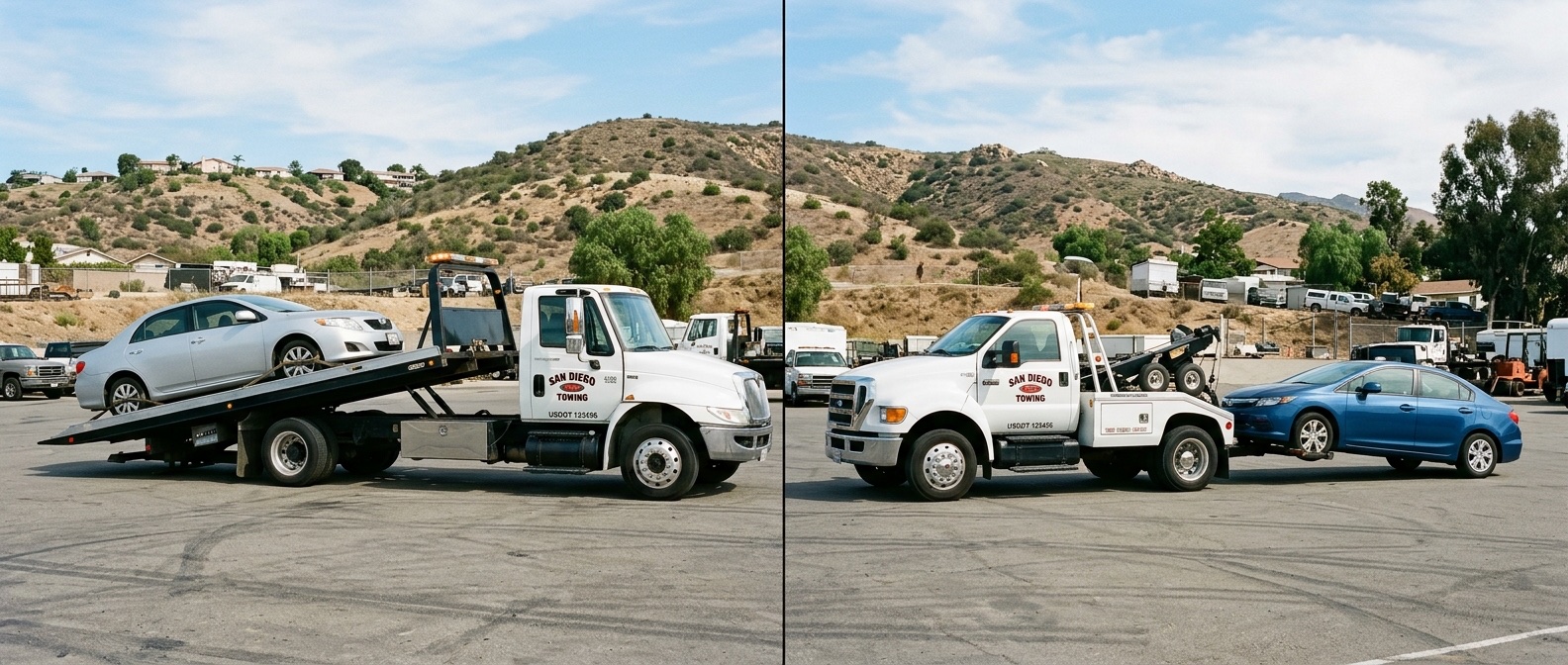
Flatbed (rollback) towing uses a hydraulic-tilt deck that lowers to ground level. The disabled vehicle is winched up the ramp and secured with four soft-strap tie-downs at the wheels. All four wheels leave the road. Nothing drags. No part of your drivetrain spins during transport.
Wheel-lift towing uses a hydraulic yoke that slides under two of the vehicle's wheels (front or rear) and lifts them off the ground. The other two wheels stay on the road and roll behind the tow truck like a trailer. The drive wheels - the wheels that send power - must be the ones lifted off the ground, or the tow will damage the drivetrain.
The Quick Tow NYC vehicle-by-vehicle rule
| Vehicle type | Method the operator quotes | Why |
|---|---|---|
| Front-wheel-drive sedan (Civic, Corolla, Accord, Camry) | Wheel-lift OK for short hauls; flatbed for over 30 miles | Drive wheels go up, rear wheels roll free |
| Rear-wheel-drive sedan (older BMW, Mustang, 240SX) | Wheel-lift with rear wheels up, OR flatbed | Same logic, drive wheels up |
| All-wheel-drive (Subaru Outback, BMW xDrive, Acura SH-AWD, every modern Audi) | Confirm the owner's manual; often a flatbed | Wheel-lift can damage the center differential and transfer case |
| 4WD truck/SUV (F-150 4x4, Tacoma, Wrangler, 4Runner) | Flatbed; OR wheel-lift only with both axles disconnected | Transfer case damage risk; many operators use a flatbed unless the owner's manual allows another method |
| Any electric vehicle (Tesla, Rivian, Lucid, Cybertruck, Hummer EV, Mach-E, Lightning) | Confirm in the owner's manual | Ask the assigned operator to follow that manual |
| Plug-in hybrid (Prius Prime, Volt, Pacifica Hybrid) | Confirm the owner's manual | Ask the assigned operator to follow that manual |
| Lowered, modified, or sports car (lowered Civic, Type R, Supra, GT-R, 911) | Often a flatbed for clearance | A wheel-lift approach angle can scrape the front lip and undertray |
| Exotic / classic / collector (Ferrari, Lambo, vintage Corvette, restored 911) | Flatbed - covered trailer on request | Cannot risk paint, body, or suspension damage |
| Damaged vehicle (collision, flat tire, broken suspension, locked-up wheel) | Flatbed | Wheel-lift requires functional rolling wheels on the un-lifted axle |
EV manufacturer towing specs
Read the current owner's manual for that model. Many EV manuals require a flatbed. Quick Tow NYC does not set a transport method. Ask the assigned operator to follow the manual.
The 5 most common towing-method mistakes
- Wheel-lift on an AWD vehicle "because it's just five miles." Five miles is enough to destroy a transfer case, and the repair bill dwarfs whatever you saved on the tow.
- Wheel-lift on an EV. Same outcome, worse repair bill. EV drive motors cost far more to replace than a transfer case.
- Wheel-lift on a lowered car. The lift mechanism scrapes the front lip and undertray every time.
- Allowing wheel-lift after a collision when a tire or wheel is damaged. The damaged wheel cannot safely roll behind the tow truck. It can separate from the hub mid-tow. Always flatbed after a collision.
- Believing the operator who says "wheel-lift is fine for your car" without checking your manual. Tow operators are not all equally trained. Your owner's manual is the final word. If the manual says flatbed, demand flatbed.
How the two methods compare
| Factor | Wheel-lift | Flatbed | Quick Tow NYC |
|---|---|---|---|
| Local hook | Lower cost, faster hookup | Higher cost, safer for modern drivetrains | Price quoted before dispatch either way |
| Long-distance | Not recommended past short hauls | The standard choice | Written quote with the mileage stated |
| Night/holiday | Some operators surcharge | Some operators surcharge | Ask what the after-hours rate is when you call |
| EV / AWD | Ask the operator | The usual choice | Ask whether the assigned operator will send a flatbed |
New York rules on towing methods
New York does not mandate flatbed versus wheel lift by vehicle type at the statute level. What the law here does regulate is who may tow from private property: in New York City that is a business licensed by the Department of Consumer and Worker Protection under Administrative Code 19-169.1 and 20-496, while the NYPD handles parking and accident tows and the NYC Sheriff handles scofflaw boot-and-tow. None of those dictates the tow method. One real constraint does shape a recovery, though: tow trucks are banned from the city's parkways, so a flatbed cannot legally run the Belt, the FDR or the Henry Hudson, which affects how an operator reaches and routes the vehicle.
When wheel-lift IS the right call
- FWD sedan that needs to move 5-10 miles to a shop
- RWD vehicle where the rear wheels can be lifted (drive wheels off the ground)
- Tight residential parking where a flatbed cannot maneuver. Ask whether the assigned operator can work that tight space, and what equipment they will send
- Apartment or garage structure with low overhead clearance - flatbeds need 12+ feet; wheel-lifts fit at 9 feet
- Quick repo or out-of-fuel relocation where the vehicle was running normally before the call
How to ask your tow operator the right question
When you call this line, leave these four data points in this order:
- Your vehicle's year, make, model, and trim (the trim tells us if it's AWD, sport package, lowered).
- Whether it's a hybrid or electric vehicle (this is the most important data point).
- What happened - mechanical failure, flat tire, collision, ran out of fuel, dead battery.
- Your location and where you want it towed.
Ask the assigned operator which method they are sending and why. If they offer wheel-lift on an EV or AWD vehicle, that is a flag. Call another operator.
When a flatbed is the safer call
Ask the assigned operator whether they will send a flatbed when the owner's manual or the vehicle type requires it, and a wheel lift when the customer asks for it and the vehicle is right for it. This brand owns no trucks and does not run a standing network equipment policy.
Rather have a pro handle it?
Towing and roadside service across the five boroughs of New York City. One local line, taking calls around the clock.
Keep learning.
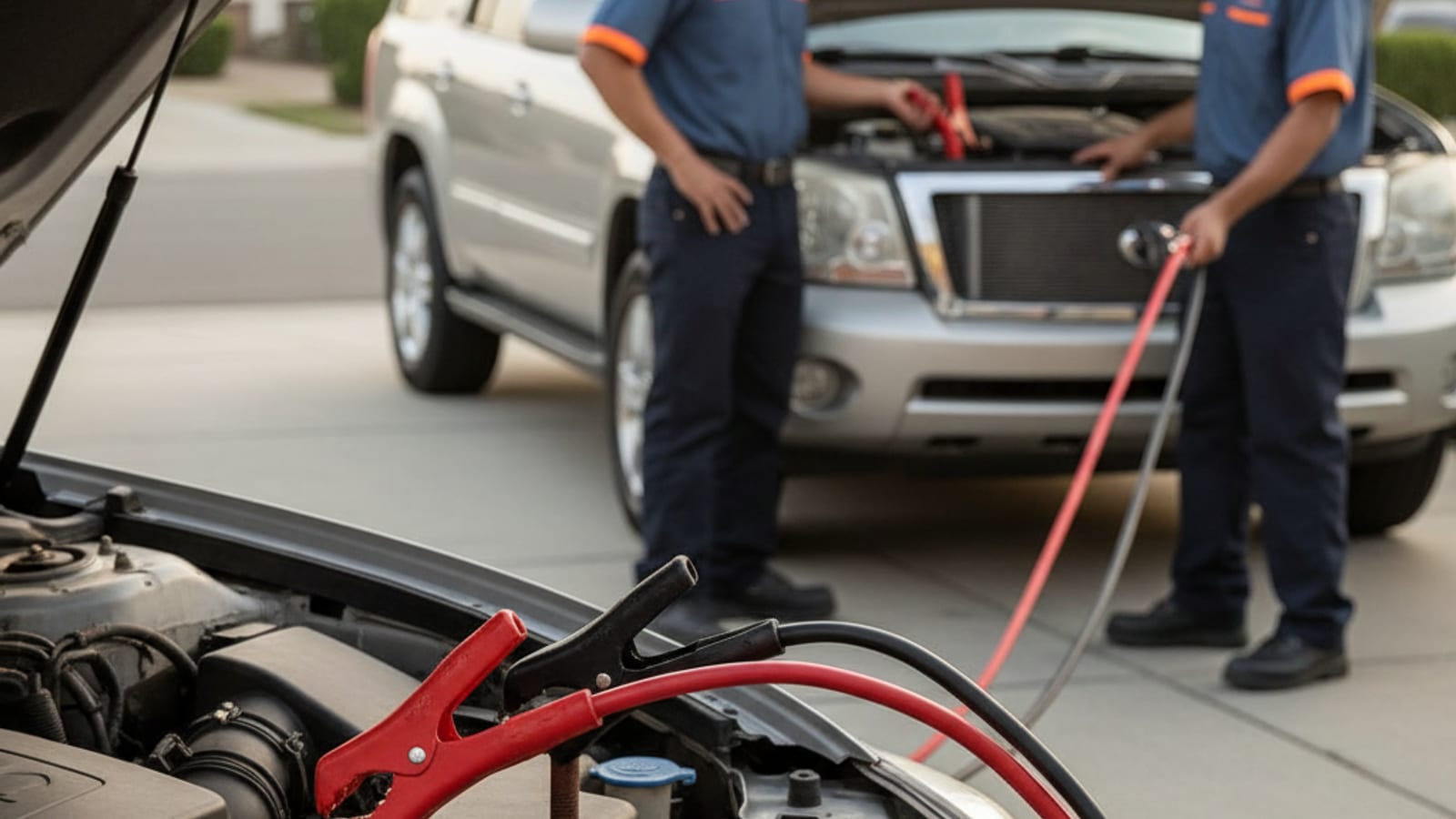
Jump-start a dead battery safely
Jumper cables are simple until you hook them wrong. Do it right and you'll avoid sparks, ruined electronics, and a tow you didn't need.
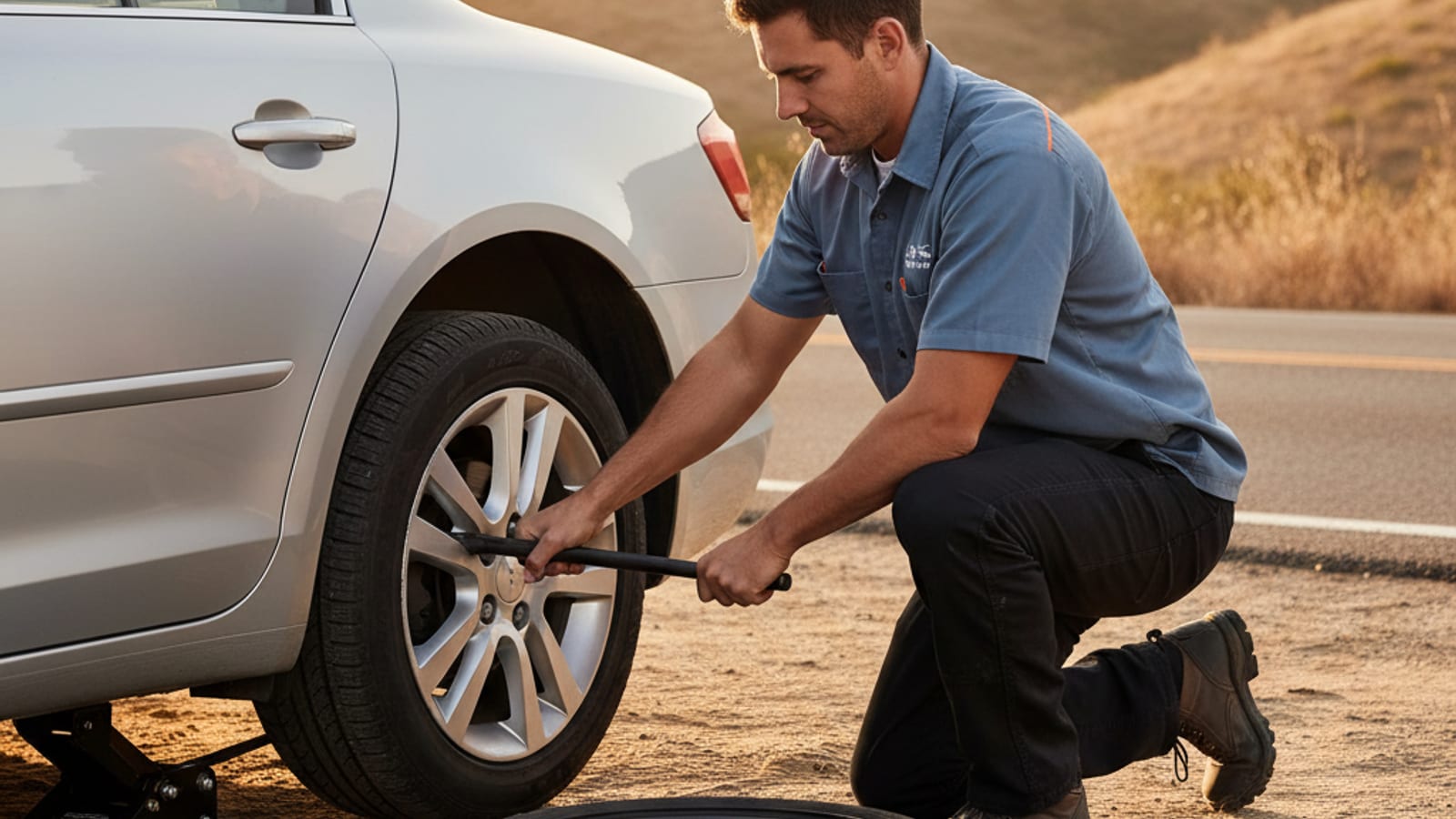
Change a flat tire on the side of the road
The difference between a 20-minute shoulder stop and an hour on the phone with a tow company is knowing where the spare and jack live before you need them.
What to do if you slide on ice or hit a flooded underpass
New York winters glaze bridges and ramps before flat streets, and a heavy rain fills a highway underpass faster than it looks. First step: stop making it worse.