Accident recovery. Winch-outs. Scenes handled right.
After a collision, rollover or slide into a roadside barrier, there's a right way and a wrong way to get the vehicle out. Wrong hooks can crack frames, damage airbags that did not deploy, or make the insurance claim worse. The Belt Parkway alone logged 1,348 crashes in 2023, the deadliest single road in the city, and a scene on the Cross Bronx or the Kew Gardens Interchange needs an operator who works those roads regularly. So does a winch-out from a flooded underpass, soft event-lot ground, or a curb drop on a narrow city block.
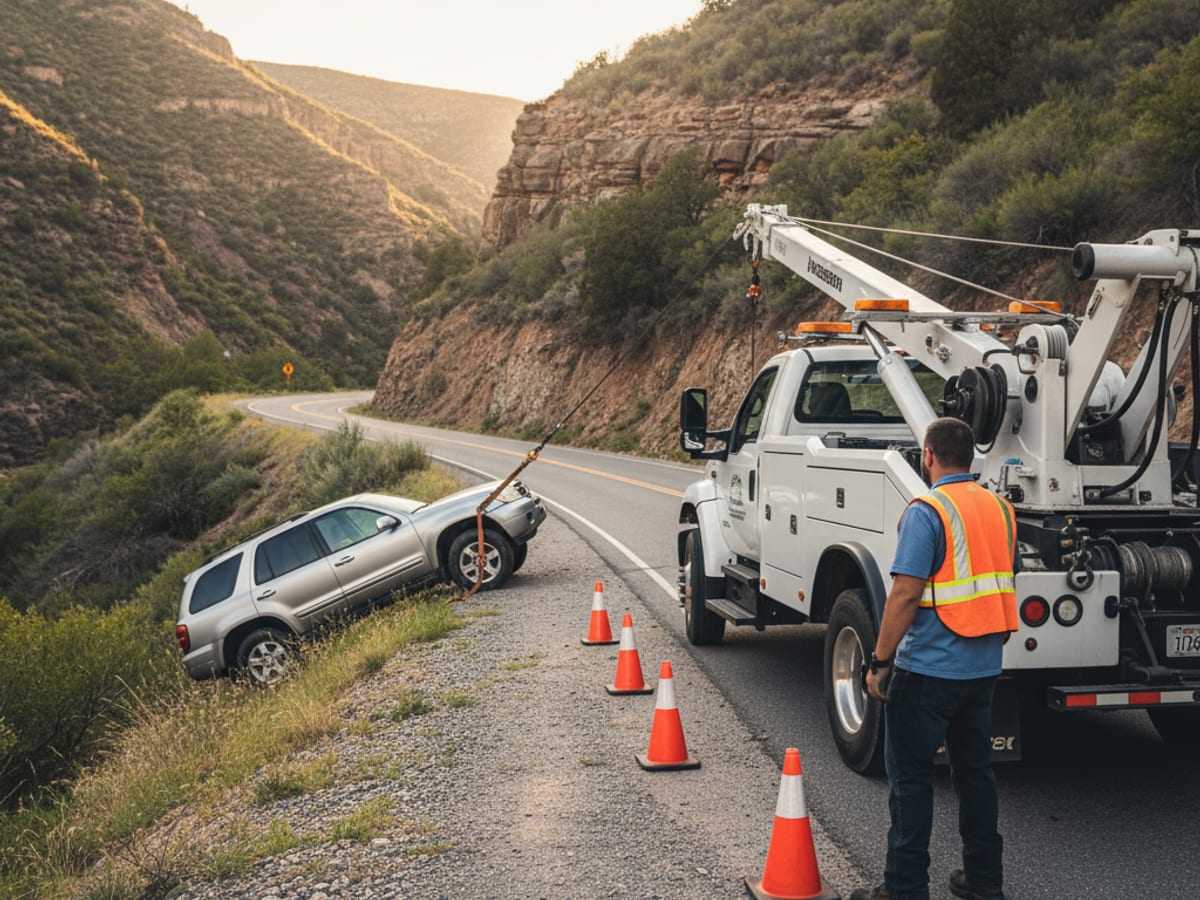
What's included in accident recovery?
- Freeway accident response on the BQE, the Cross Bronx, the FDR, the Gowanus and the Van Wyck
- Winch-out recovery from flooded underpasses, soft shoulders, and curb drops
- Flood-water recovery after a storm like the remnants of Hurricane Ida
- Rollover righting and recovery
- Post-collision paperwork; a body-shop or storage drop is quoted separately
- Insurance-company photo and documentation support
- Law-enforcement scene coordination
- Recovery for vehicles found after a police-directed theft recovery
When do you need accident recovery?
- Vehicle slid into a barrier, a median, or a flooded underpass
- Collision with disabled or immobilized vehicle
- Rollover requiring careful righting
- Stuck in rising flood water during a storm
- Stuck off-road after leaving a paved shoulder
- Need a tow to complete an insurance claim
- Police-directed removal from the scene
What do drivers ask about accident recovery?
Will my insurance cover this?
Call your insurer right after the tow and ask what they'll reimburse. The assigned operator can give you an invoice with the scene location, reason for the tow, and destination if they issue one. Quick Tow NYC doesn't write that invoice.
How do winch-outs work?
When a vehicle slides off the road, the operator uses the wrecker's integrated winch to pull it back onto the pavement. Ask them to explain what they see and what they plan to do before they start. Time on scene depends on the recovery, and they quote that job before they start.
What happens if I break down at the Bruckner Interchange or another confusing interchange?
The Bruckner Interchange in the Bronx is where the Cross Bronx, the Bruckner, the Hutchinson River Parkway and the Major Deegan all meet, and the Kew Gardens Interchange in Queens is just as bad. Neither gives you a wide shoulder to work from safely, and the Cross Bronx has almost no shoulder at all. Remember that tow trucks are banned on the parkways, so if you're on the Hutchinson or the Grand Central the operator has to reach you from an approved access point. Stay belted, hazards on, and call us.
Do you coordinate with the police?
The network covers freeway recovery across the city. Be clear on which kind of call you have: a police-ordered tow in New York City goes to an NYPD pound, and you don't pick the company. There is one pound system citywide, run by the NYPD, so there's no separate town lot to chase. Once the vehicle is released, or if the tow was never police-ordered, call us and we line up an operator for the destination you choose.
What do I need to do at the scene?
If everyone is safe, step off the road, call 911 if it's a collision, and then call us. Do not try to move the vehicle yourself. Do not stand in traffic to take photos. The operator will arrive, stage the vehicle safely, and help you coordinate with law enforcement, the insurance company, and the body shop.
Where do we offer Accident Recovery across New York City?
We line up accident recovery in every neighborhood across the five boroughs. Pick your neighborhood for local details and service specifics.
See accident recovery in all 156 cities
Need accident recovery in New York City?
Line takes calls around the clock. Price quoted before anyone rolls.